
A case study in rheumatoid arthritis, gut-driven immune dysregulation, and the terrain work that changed what was possible
Names and identifying details have been changed to protect the client’s privacy.
Njeri was not someone who complained easily.
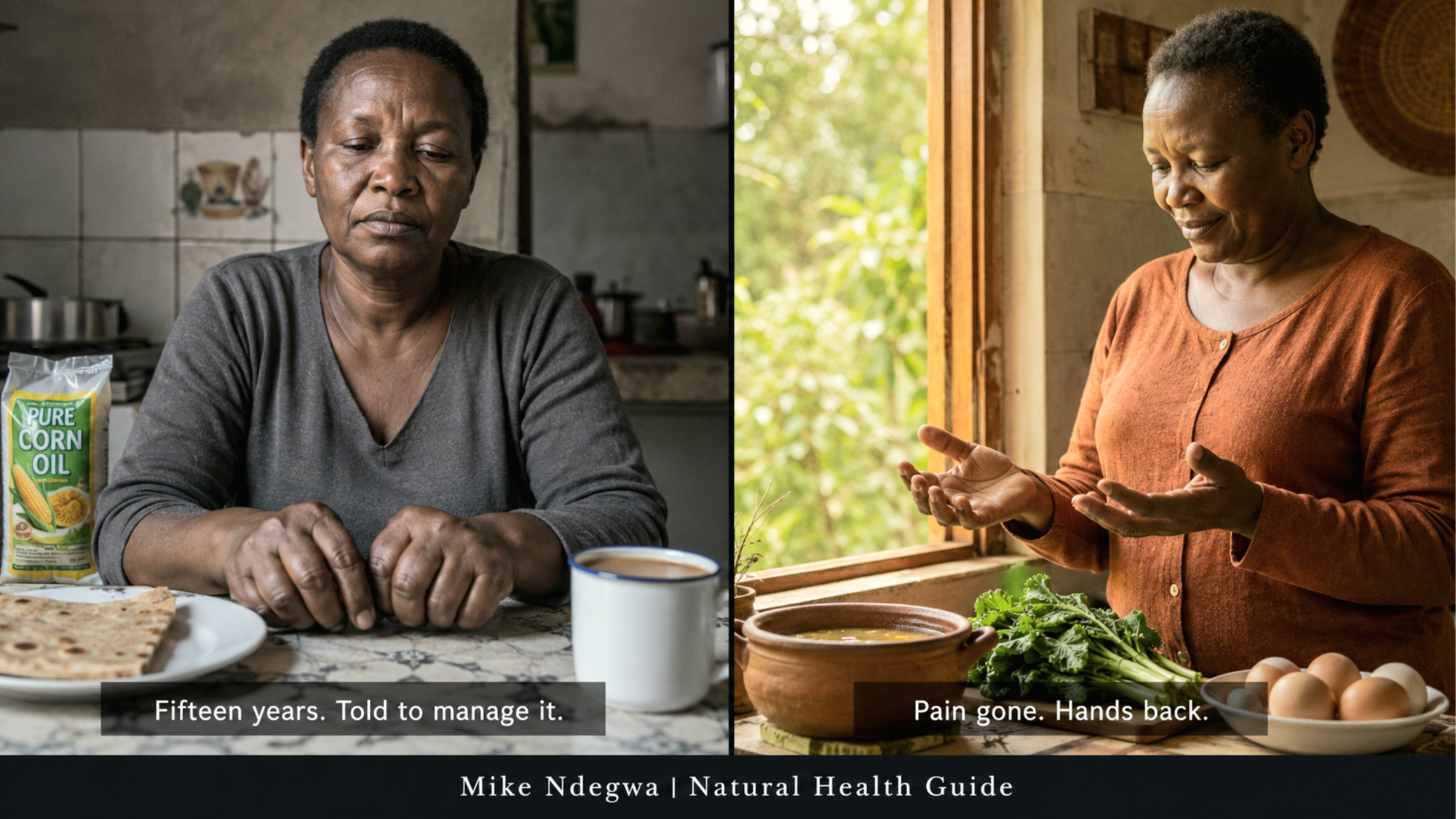
She was practical, hardworking, and accustomed to managing life with the resources available to her. She had been living with rheumatoid arthritis for over fifteen years by the time she sent the first message, and in all that time she had continued functioning, continued working, continued doing what needed to be done. The pain was simply part of the background of her days.
But something had been shifting. The hands were becoming unreliable. The joints in her wrists and fingers were stiffening and inflaming in ways that were beginning to limit what she could do physically, not just how she felt doing it. She was approaching the point where the disease that had been manageable for a decade and a half was about to become disabling.
She reached out in February 2026. In her first message she named the condition and said it was giving her more trouble than anything else she was dealing with. She was looking for help, and she was open to trying something she had not tried before.
What Rheumatoid Arthritis Actually Does Inside the Body
Rheumatoid arthritis is classified as an autoimmune condition, which is accurate as far as it goes. The immune system produces antibodies, primarily rheumatoid factor and anti-cyclic citrullinated peptide antibodies, that target proteins within the joints. These antibodies and the immune complexes they form deposit in the synovial membrane, the thin tissue lining the joint cavities. The resulting inflammation thickens this membrane into a destructive tissue called pannus, which slowly degrades cartilage and eventually bone.
The inflammatory cascade is driven by cytokines: tumour necrosis factor alpha (TNF-alpha), interleukin-1, interleukin-6, and interleukin-17 among others. These are the molecular signals that conventional medicine targets with biologic drugs. Block the signal, reduce the inflammation. The approach works for symptom management. It does not ask why the immune system began producing these signals in the first place.
The terrain answer to that question begins in the gut.
The intestinal wall is not simply a tube for moving food through the body. It is a sophisticated selective barrier, one cell layer thick in most places, maintained by protein structures called tight junctions that seal the spaces between cells. When the gut lining is intact, it allows nutrients through while keeping undigested food particles, bacterial fragments, and metabolic waste out of the bloodstream.
When tight junctions break down under sustained pressure from inflammatory foods, seed oils, poorly digested starches, and inadequate digestive enzymes, the barrier becomes permeable. Bacterial lipopolysaccharides (LPS), the structural components of the outer membrane of gram-negative gut bacteria, begin crossing into systemic circulation. Pattern recognition receptors in the immune system respond to these bacterial fragments as threats and mount an inflammatory response. Repeated exposure keeps the immune system in a state of chronic activation.
In some individuals, the antibodies generated against these bacterial antigens cross-react with the body’s own proteins through a mechanism called molecular mimicry. The immune system, trained to attack a bacterial fragment, begins attacking proteins in joint tissue that share a structural resemblance to that fragment. The joint becomes the site of an immune assault that originated in the gut.
The liver’s role in this process is equally important and equally overlooked. The liver is responsible for clearing immune complexes, the bundles of antibody and antigen that form when the immune system does its work. Kupffer cells, the liver’s resident immune cells, capture and neutralise these complexes as they pass through the hepatic circulation. When the liver is congested under years of inflammatory dietary input, Kupffer cell function slows. Immune complexes recirculate. They deposit in peripheral tissues, including joint linings. The fire that should have been extinguished keeps burning.
What Njeri’s Terrain Showed
When Njeri described her daily eating pattern, the picture assembled itself clearly.
Breakfast was ngwaci (sweet potato) with two eggs, a reasonable protein-starch pairing. Lunch and dinner rotated through githeri (a combination of maize and beans), rice, ugali, beef, sukuma wiki, cabbage, spinach, and carrots, with occasional chapati. Her cooking oil at home was organic olive oil, but chapati, which appeared regularly, was made with corn oil. Kenyan tea with milk and sugar was a daily constant. She ate warm food approximately twice in two weeks.
Several elements of this pattern were directly feeding the fire that was destroying her joints.
Corn oil is high in linoleic acid, an omega-6 fatty acid that the body converts into arachidonic acid, the direct precursor of prostaglandins and leukotrienes: the lipid mediators of inflammation. Every serving of corn oil chapati was delivering pro-inflammatory signalling molecules into a system already struggling to contain an immune response. The fact that she used olive oil at home but corn oil for chapati meant this exposure was regular and consistent.
Githeri presented a different problem. Maize is a high-glycaemic starch that elevates blood sugar rapidly and drives insulin spikes. Beans add significant fermentable fibre. In a gut with intact mucosal defences, fermentation from beans produces short-chain fatty acids that nourish the gut lining. In a gut where the mucosal layer is already compromised by chronic immune activity, that same fermentation produces gas, bloating, and microbial metabolites that increase permeability. The food that felt like a nutritional anchor was working against the healing the gut needed.
The near-absence of warm food was the detail that was easiest to overlook and most clinically significant. Digestive enzyme activity is temperature-dependent. The stomach requires hydrochloric acid, produced optimally in a warm environment, to activate pepsin and begin protein breakdown. Cold and room-temperature food repeatedly consumed means lower digestive efficiency, less complete protein digestion, and larger antigen-sized protein fragments arriving at the intestinal wall. For a gut already sensitised by years of inflammation, this was a continuous low-grade provocation.
The Kenyan tea told its own story. Multiple cups per day, with milk and sugar: insulin spikes from the sugar, potential antigenic load from milk proteins in a permeable gut, and tannins that bind iron and impair absorption at a time when her blood would later reveal markers consistent with nutrient depletion.
The Goodbye She Almost Did Not Make
The Phase 1 plan arrived on the fifteenth of February. Njeri read it and sent one message before starting.
“Hapo kwa githeri na chai ndio ngumu kidogo but I got this.”
The githeri and the tea are the hardest parts. That sentence is not about discipline or willpower. It is about the way that food is embedded in daily life, in rhythm and community and comfort, in a way that a list of instructions cannot fully acknowledge. She was being asked to step away from things that were not just meals but markers of ordinary days.
She did it anyway.
The First Four Weeks: When Healing Does Not Look Like Healing
Week 1 was physiologically turbulent in a way that would have stopped a less determined person.
Four days in, Njeri reported sweating and intense hunger between meals, strong enough that she questioned whether she could continue. This was not failure. It was a predictable and temporary blood sugar withdrawal. Her body had been running on frequent high-glycaemic carbohydrate for years. The insulin rhythm was deeply established. Removing the frequent starch input caused blood glucose to dip between meals as the body had not yet learned to regulate its own glucose release through hepatic glycogenolysis without the constant external supply. The sweating was adrenaline: the nervous system’s emergency response to a perceived glucose shortage.
She was not given permission to stop. She was given an explanation. The sweating would ease within three to five days as the body adjusted. She added a small bridge of warm salted water or bone broth when the signals became strong. She stayed on plan.
Her Week 1 tracking showed joint pain at 5 out of 10, morning stiffness at 4, energy at 8, digestion at 9, sleep at 6.
Week 2 brought something more unsettling: the pain became more widespread. It had been concentrated in the knee. Now it was spreading to other areas. Her instinct was that this meant regression. The clinical reading was the opposite. When systemic inflammatory load begins to fall, the body gains the capacity to mobilise and clear inflammatory deposits that had been walled off in specific tissues. The pain moving is the inflammatory waste finding its exit through joints that are now being asked to release what they have been holding. The fire does not burn in one place when the whole terrain is inflaming. It concentrates where clearance is occurring.
Week 3 brought wrist pain at 6 out of 10, the highest recorded. Her digestion dropped to 8, and she had correctly identified the cause herself before being asked: spinach. Spinach is high in oxalates, compounds that irritate an inflamed gut lining and increase permeability in exactly the way the plan was trying to reduce. Her gut was now sensitive enough to signal this clearly. She paused the spinach. Digestion returned. The observation itself was evidence that healing was occurring: a gut recovering its sensitivity tells you precisely what it does not need.
Then came Week 4.
Week Four: The Numbers That Changed Everything
Joint pain dropped from 6 to 3. Morning stiffness fell from 3 to 1. Energy reached 9. Digestion returned to 9. Sleep, which had been 5 in the worst week, rose to 6.
She reported it as her best week. The tracking confirmed it as a genuine terrain shift rather than a good few days. The wrist inflammation that had concentrated in Week 3 had completed its clearance. Pain returned to fewer joints at lower intensity. The pattern that had been explained three weeks earlier, an exhaust vent for inflammation moving through the system, had resolved exactly as described.
This is the moment in healing work where trust is either established permanently or lost. The pain had gone up before it went down. The client had stayed the course through a week of worsening numbers on the basis of a clinical explanation they had no personal reference point to validate. When the numbers fell, that explanation became experience, not theory. From this point forward, Njeri trusted the process not because she was told to but because her body had demonstrated the pattern was real.
By Week 5, morning stiffness had reached zero. It would not return above zero again for the remainder of her programme. Energy held at 9. Digestion reached 10. Sleep climbed to 8.
“I am happy.”
Phase 2: Becoming the Expert on Her Own Body
Phase 1 had cleared the major inflammatory load and established the foundation. Phase 2 had a different purpose. It was not about restricting. It was about expanding, one food at a time, with enough observation between each introduction to know what the body accepted and what it did not.
This is where the work became most personal. No two people with rheumatoid arthritis have identical trigger foods. The foods that were contraindicated in Phase 1 because they were broadly inflammatory for an inflamed gut may or may not remain problematic once the gut terrain has improved. The only way to know is to test systematically.
Njeri introduced millet, green apple, strawberries, bell peppers, and zucchini across the early weeks of Phase 2. She introduced too many simultaneously in one week, and the data became uninterpretable. A pain increase arrived. Sleep fell. She could not tell which food was responsible.
She paused everything new. The pain settled. The sleep recovered. And when she reintroduced foods one at a time, the signal was unmistakable.
The Bell Pepper Discovery
Bell peppers belong to the nightshade family, Solanaceae, along with tomatoes, potatoes, and aubergine. Nightshades contain alkaloid compounds, primarily solanine and related glycoalkaloids, that have a well-documented capacity to increase intestinal permeability in sensitive individuals. In a gut that has spent years inflamed and is still in the process of restoring its mucosal barrier, nightshade alkaloids can disrupt tight junctions and allow antigen penetration at precisely the point where the terrain work is trying to seal them.
For individuals with autoimmune conditions affecting connective tissue and joints, nightshade sensitivity is disproportionately common. The mechanism is not allergy in the conventional sense. There is no immediate IgE-mediated response. The joint pain arrives the day after exposure, sometimes two days after, which makes the connection almost impossible to identify without systematic single-food testing.
Every time Njeri reintroduced bell pepper, joint pain rose. When she removed it, pain fell within days. She confirmed the pattern three separate times across her Phase 2 weeks without prompting, simply because she was paying close enough attention to know what her body was telling her. By the end of Phase 2, bell pepper was identified as a confirmed trigger. She did not need to be told to avoid it. She chose to avoid it because she had seen the evidence herself.
Strawberries presented a similar pattern, likely through a different mechanism: they are moderately high in histamine and salicylates, both of which can provoke an inflammatory response in a sensitised system. She tested them separately and arrived at the same conclusion. Sleep disruption and joint pain increase followed exposure. Removal resolved both.
This process, months of precise single-food testing, is not convenient. It is also the only way to arrive at a genuinely personalised terrain map rather than a generic exclusion list that may remove foods the body tolerates perfectly well alongside foods it does not.
The Blood Work in July: A Terrain Reading
In early July 2026, Njeri shared recent blood work results and made a request that was more revealing than the numbers themselves. She wanted to address the markers that were off through diet. Not supplements. Diet.
Five months into working with food and rhythm, she had developed enough understanding of her own terrain that she was approaching blood work not as a verdict to be managed by a pharmacist but as information to be addressed through the same methodology that had resolved her joint pain. That shift in orientation is not a small thing.
The results showed low neutrophils, a raised mean corpuscular volume (MCV), low Vitamin D at 15.3, low creatinine, and an A1c below normal range.
None of these were surprising in the context of her history. Low neutrophils in someone whose immune system has been chronically activated by fifteen years of autoimmune disease reflect immune reserves that have been depleted by sustained activation. The neutrophil count typically rises as systemic inflammation resolves and the bone marrow is no longer competing with an ongoing immune response for the amino acids and micronutrients it needs to produce blood cells.
The raised MCV, red blood cells larger than normal, is a classical marker of Vitamin B12 or folate deficiency. Both are absorbed in the small intestine, and both absorption pathways are impaired by the chronic gut inflammation that drives conditions like rheumatoid arthritis. Years of inflamed intestinal lining means years of suboptimal B12 and folate absorption regardless of what is eaten. As the gut heals, absorption capacity returns.
Vitamin D at 15.3 is significantly below the functional range. Vitamin D is fat-soluble, meaning it requires adequate bile flow and fat absorption to enter the bloodstream from the gut. A gut that has been inflamed for fifteen years does not absorb fat-soluble vitamins efficiently. Sunlight remains the most direct route to Vitamin D that does not depend on gut function. Food sources, particularly egg yolks and fatty fish, support this process as gut absorption improves.
Low creatinine reflects reduced muscle mass. The inflammatory cytokines that drive rheumatoid arthritis, particularly TNF-alpha and interleukin-6, are directly catabolic. They drive muscle breakdown as a sustained feature of the disease. As inflammation resolves and protein absorption from food improves, muscle mass rebuilds. Creatinine follows.
These were not four separate problems. They were four downstream expressions of one terrain that had been under sustained inflammatory strain for fifteen years and was now, finally, beginning to recover.
July 14, 2026: What Njeri Wrote
On the morning of the fourteenth of July, five months after her first message, Njeri sent a note that did not read like a tracking report.
She wrote that she wanted to sincerely thank Mike for walking the wellness journey with her. That she had been at a point where she was almost losing the ability to use her hands due to the rheumatoid arthritis. That in about six months they had been able to address an illness she had lived with for over fifteen years. She described it as a learning and unlearning curve. She noted that no one would have convinced her to give up her chapati and her Kenyan tea, and yet she could not remember the last time she had eaten either of them.
“Pain is gone, my energy level is at 10 out of 10, and I have no worries at all.”
She had also referred her daughter, who had reached out separately in the days before this message. The referral was the most precise summary of her experience that any words could offer. She had seen enough in her own body to want the same process for someone she loved.
What This Case Actually Demonstrates
Rheumatoid arthritis is not a joint disease that originates in joints. It is an immune system dysregulation that originates in the gut and liver and expresses itself in the joints because that is where immune complex deposits tend to concentrate. This distinction is not semantic. It determines whether the treatment addresses the site of the symptom or the source of the condition.
Njeri’s joints were not the problem. They were the location where fifteen years of gut-driven immune activation had been most visibly accumulating. The pro-inflammatory seed oil in her chapati was feeding an arachidonic acid cascade that fed the cytokine storm in her synovium. The high-glycaemic starch load was driving repeated insulin spikes that compounded hepatic congestion. The cold food was suppressing digestive enzyme activity and driving incomplete protein digestion, increasing the antigen load arriving at an already-permeable gut wall. The tea was spiking insulin and blocking the iron and mineral absorption that her immune cells needed to function.
None of these were things she had chosen carelessly. They were the ordinary features of a daily diet that had never been connected to the condition destroying her joints.
The redistribution pattern across her first three weeks is worth understanding clearly because it is one of the features of terrain healing that most reliably causes people to abandon the process too soon. Pain that moves and temporarily intensifies as the systemic inflammatory load decreases is not regression. It is the body clearing deposits that had been stabilised by a wall of ongoing systemic inflammation. When the systemic load falls, those localised deposits become accessible for clearance. They become more noticeable before they disappear. The instinct to stop at this point is understandable. The correct response is to explain the mechanism and ask the client to observe what happens next. In Njeri’s case, Week 3 was the hardest week. Week 4 was the breakthrough. The clients who stop in Week 3 never reach Week 4.
The bell pepper discovery in Phase 2 demonstrates something that applies beyond her case. Food sensitivity in autoimmune conditions is not uniform. Nightshades are problematic for some people with rheumatoid arthritis and not others. There is no universal exclusion list that applies to every person. What there is, for each individual, is a specific set of foods that cross-react with their particular immune sensitivity pattern. The only way to identify those foods is to remove everything potentially problematic, wait until the terrain is calm, and then reintroduce one food at a time with enough gap between introductions to read the signal clearly. That process takes patience. It also produces a result that no blood test or elimination protocol handed to someone without this observation process can deliver: a personalised terrain map that the client owns because they discovered it themselves.
Njeri’s final blood work request was perhaps the most telling detail of all. She was not asking for a supplement protocol. She was asking to fix her blood markers through diet. In five months, she had accumulated enough direct experience of what food does inside her body that the supplement model, which had been the default available to her for fifteen years, had been replaced by a framework she trusted more because she had lived it.
The pain is gone. The energy is at ten. The hands work. The daughter has been referred.
That is terrain work over time.
If you have been living with rheumatoid arthritis, another autoimmune condition, or joint pain that has not responded to conventional management, the conversation starts with understanding your terrain. Reach out here to begin a free intake assessment.
Mike Ndegwa | Natural Health Guide